0
An empty cart
You have no item in your shopping cart

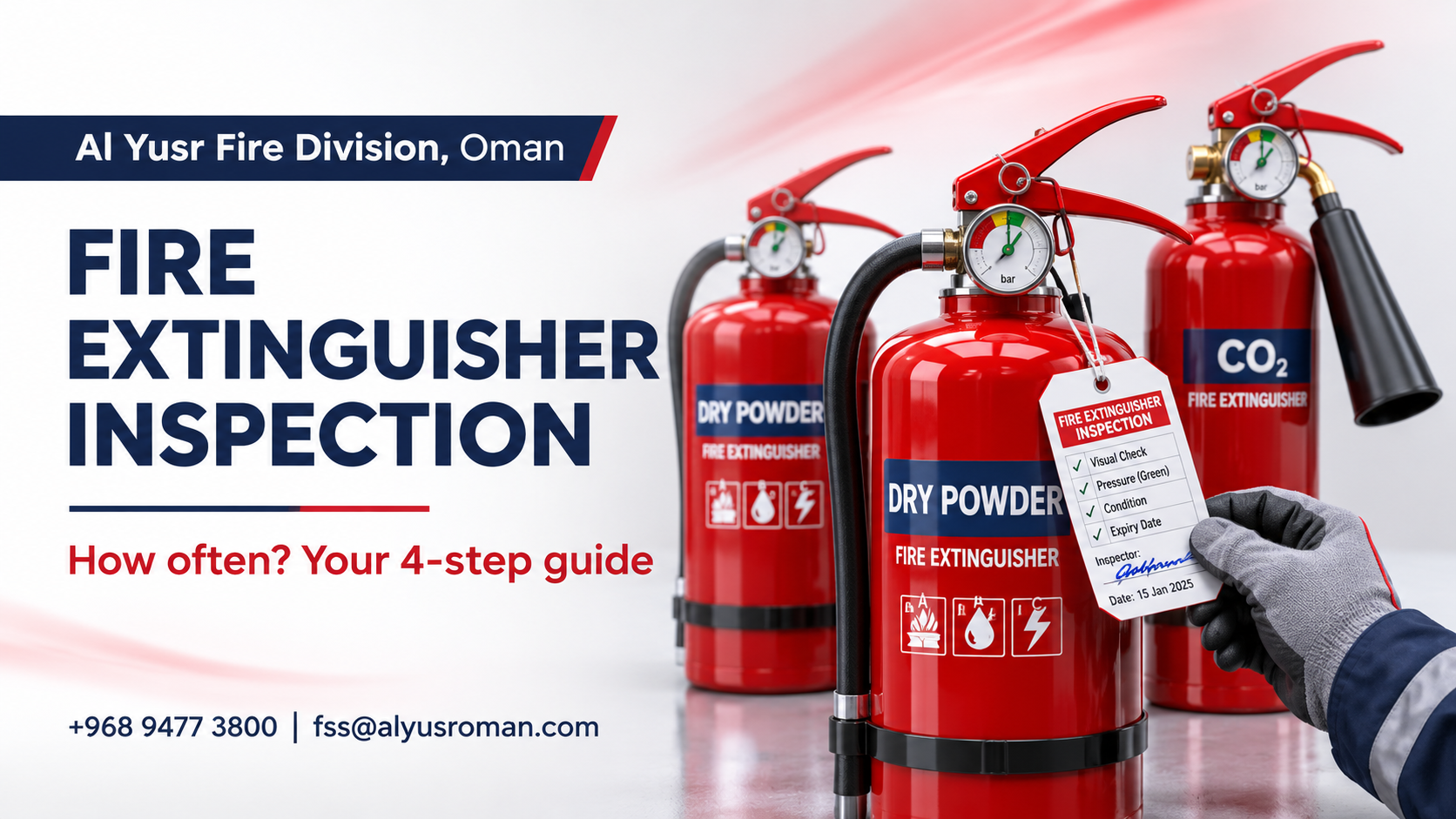
A fire extinguisher inspection is one of the cheapest safety checks a building can do, and one of the most skipped. An extinguisher can hang on the wall for years looking perfect while its pressure leaks away, its powder cakes solid or its hose cracks. Nobody finds out until the day it is needed.
So how often should fire extinguishers be inspected and refilled in Oman? This guide breaks down the four levels of fire extinguisher inspection and maintenance, what each one involves, who should do it, and the warning signs that mean an extinguisher needs attention now.
In Oman, fire safety rules are enforced by the Civil Defence and Ambulance Authority, which sets the standards for fire protection systems in buildings. Building permits are only issued after civil defence clearance, and having working extinguishers is not optional: Oman’s Public Prosecution has warned that failing to provide a fire extinguisher can lead to a fine of up to RO 200 and up to one month in prison.
But compliance is only half the story. An extinguisher that has never been inspected may not work at all, and a fire grows fast. As we covered in our post on fire safety compliance in Oman, approval is not a one-time stamp: equipment has to stay in working order every day after the inspector leaves.
Oman’s climate adds its own risks. Heat, humidity on the coast and dust inland can corrode cylinders, damage seals and cake dry powder over time, which makes regular fire extinguisher inspection even more important here.
Most professional fire companies, including those working in the GCC, follow the international standard NFPA 10 for portable fire extinguishers. It sets four layers of checks, each deeper than the last.
| Level | How often | Who does it |
|---|---|---|
| Visual fire extinguisher inspection | Every month | A trained person on site |
| Annual maintenance | Every year | A licensed fire safety company |
| Internal examination | Every 5 or 6 years, depending on type | A licensed fire safety company |
| Hydrostatic (pressure) test | Every 5 or 12 years, depending on type | A licensed fire safety company |
This is a quick check, about a minute per unit, that a trained staff member can do. Record the date and initials on the tag or in a logbook each time.
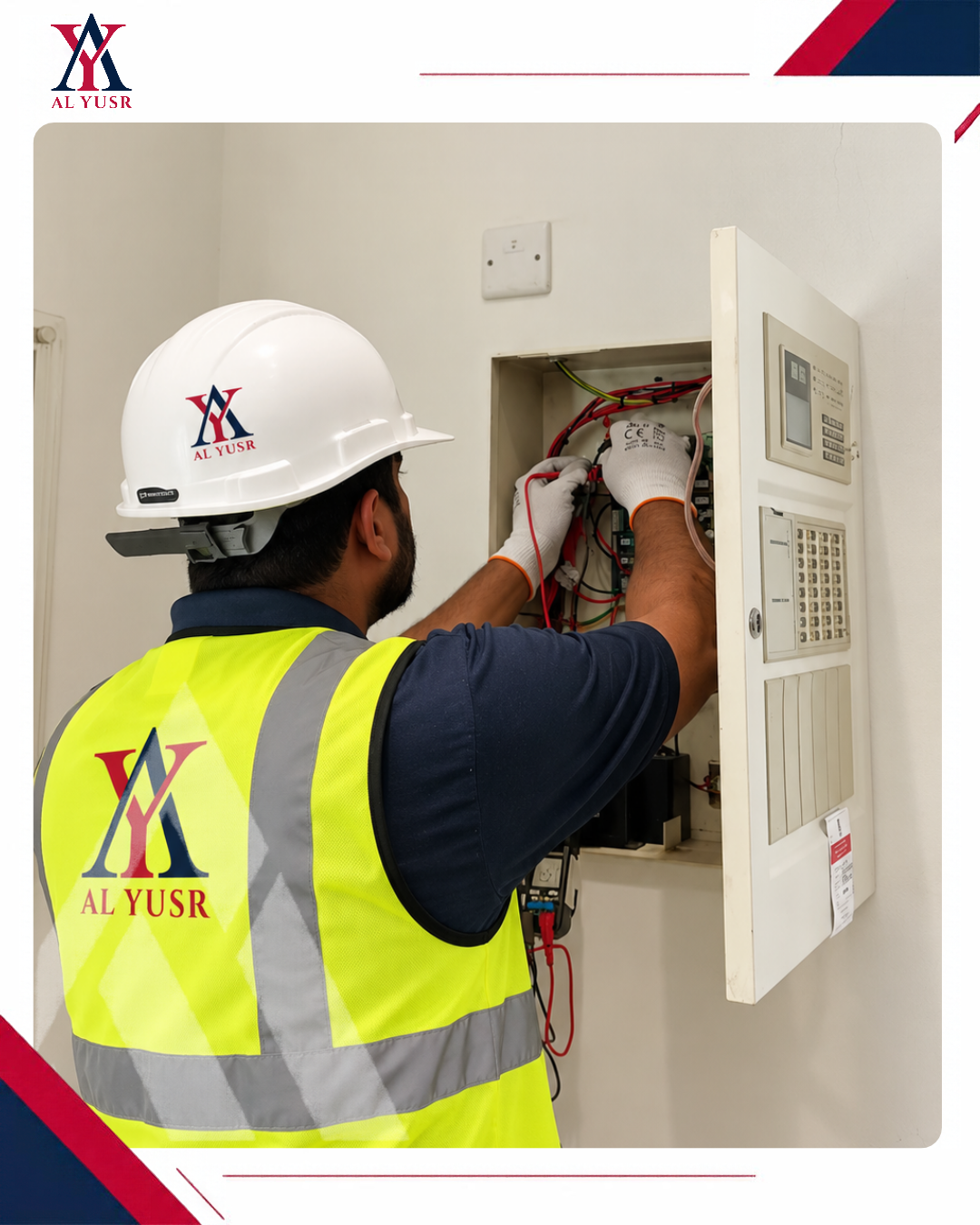
Once a year, every extinguisher should be inspected by a qualified technician. This goes further than a visual check: the technician examines the cylinder, valve, hose and mechanical parts, checks the weight or pressure, confirms the extinguisher is the right type for the area, replaces seals and attaches a new service tag. CO2 extinguishers have no gauge, so they are weighed to confirm they are still full.
Stored-pressure dry powder extinguishers, the most common type in Omani buildings, need a deeper service every six years. The unit is emptied, opened, checked inside for corrosion and caked powder, then refilled and repressurised. Water, foam and CO2 extinguishers are examined internally at their five-year test instead.
The cylinder itself is pressure tested with water to prove it can still safely hold its working pressure. Under NFPA 10, CO2, water and foam extinguishers are tested every five years, while dry powder extinguishers are tested every twelve years. A cylinder that fails is taken out of service.
There is no fixed refill date that applies to every unit. A fire extinguisher must be refilled:
Disposable, non-rechargeable extinguishers cannot be refilled. Under NFPA 10 they are replaced, typically no later than 12 years from manufacture.
Replace or service the extinguisher straight away if a fire extinguisher inspection finds any of these:
The monthly visual check, yes: any trained staff member can do it. Annual maintenance, internal examinations, hydrostatic testing and refilling should always be done by a licensed fire safety company with the right equipment and certification. Those services also produce the records and service tags that inspectors and insurers expect to see.
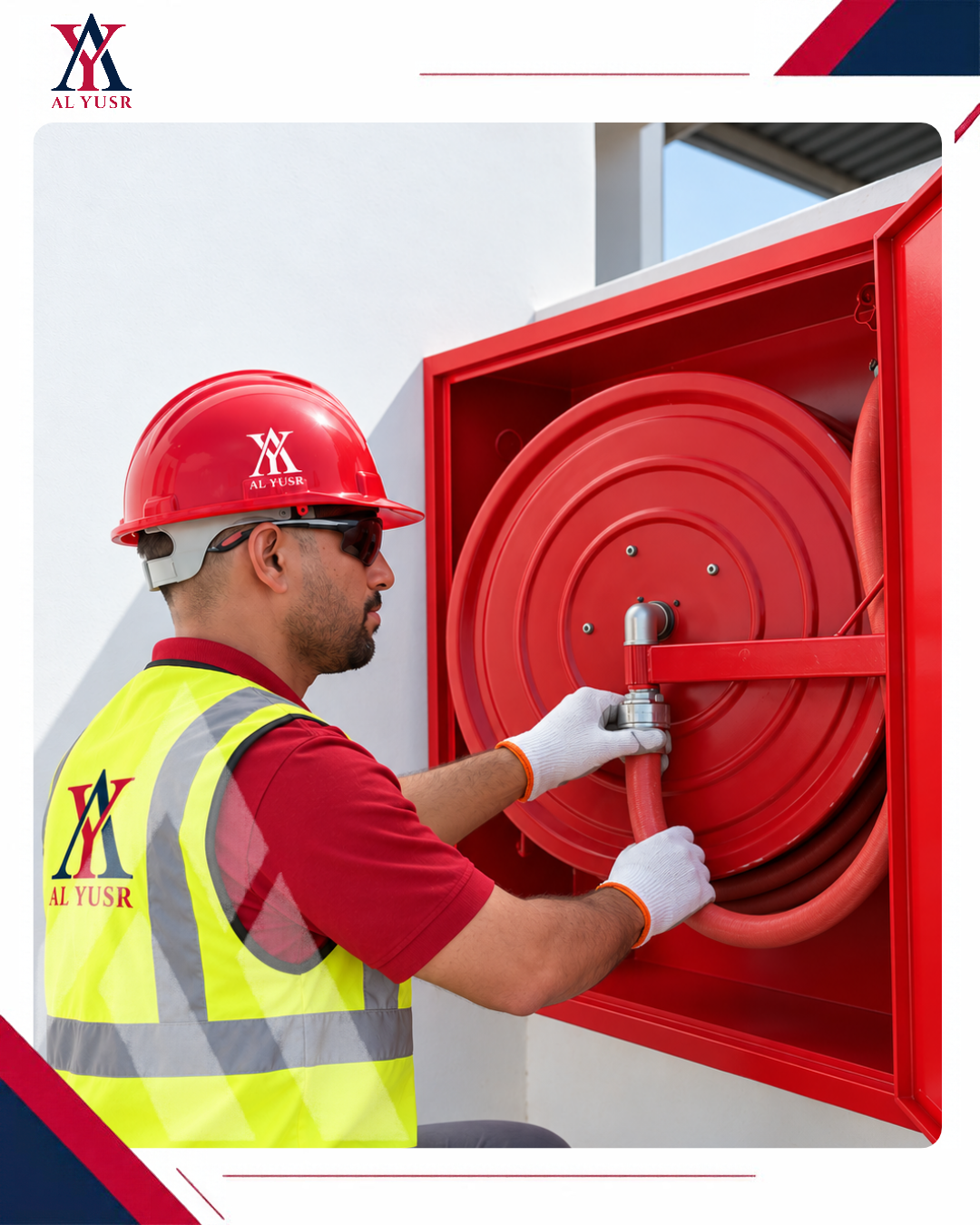
Al Yusr Fire Division supplies fire extinguishers and fire hoses, and provides annual fire safety inspection, maintenance of fire equipment and certification for companies across Oman. We can take over the inspection schedule for your extinguishers alongside your fire alarm system, so every unit stays tagged, charged and ready. Read more about our fire safety services in Oman.
For the full technical standard behind these intervals, see the NFPA 10 standard for portable fire extinguishers.
Check it visually every month and have it inspected by a licensed fire safety company every year. Deeper internal examinations and pressure tests follow every 5, 6 or 12 years depending on the type.
A well-maintained rechargeable extinguisher can stay in service for many years as long as it passes its inspections and pressure tests. Disposable units are replaced, typically within 12 years of manufacture.
Not on a fixed schedule, but it will be emptied and refilled at its internal examination, and it must be refilled if an inspection finds low pressure, lost weight or a broken seal.
Not sure when your extinguishers were last serviced? Call Al Yusr Fire Division on +968 9477 3800 or email [email protected] to book a fire extinguisher inspection for your building.