0
An empty cart
You have no item in your shopping cart

A fire alarm system is not one device. It is six parts that must work together, and if one of them fails, the whole fire alarm system is weaker than it looks. For building owners and facility managers in Oman, knowing what each part does is the first step to keeping people safe and staying compliant.
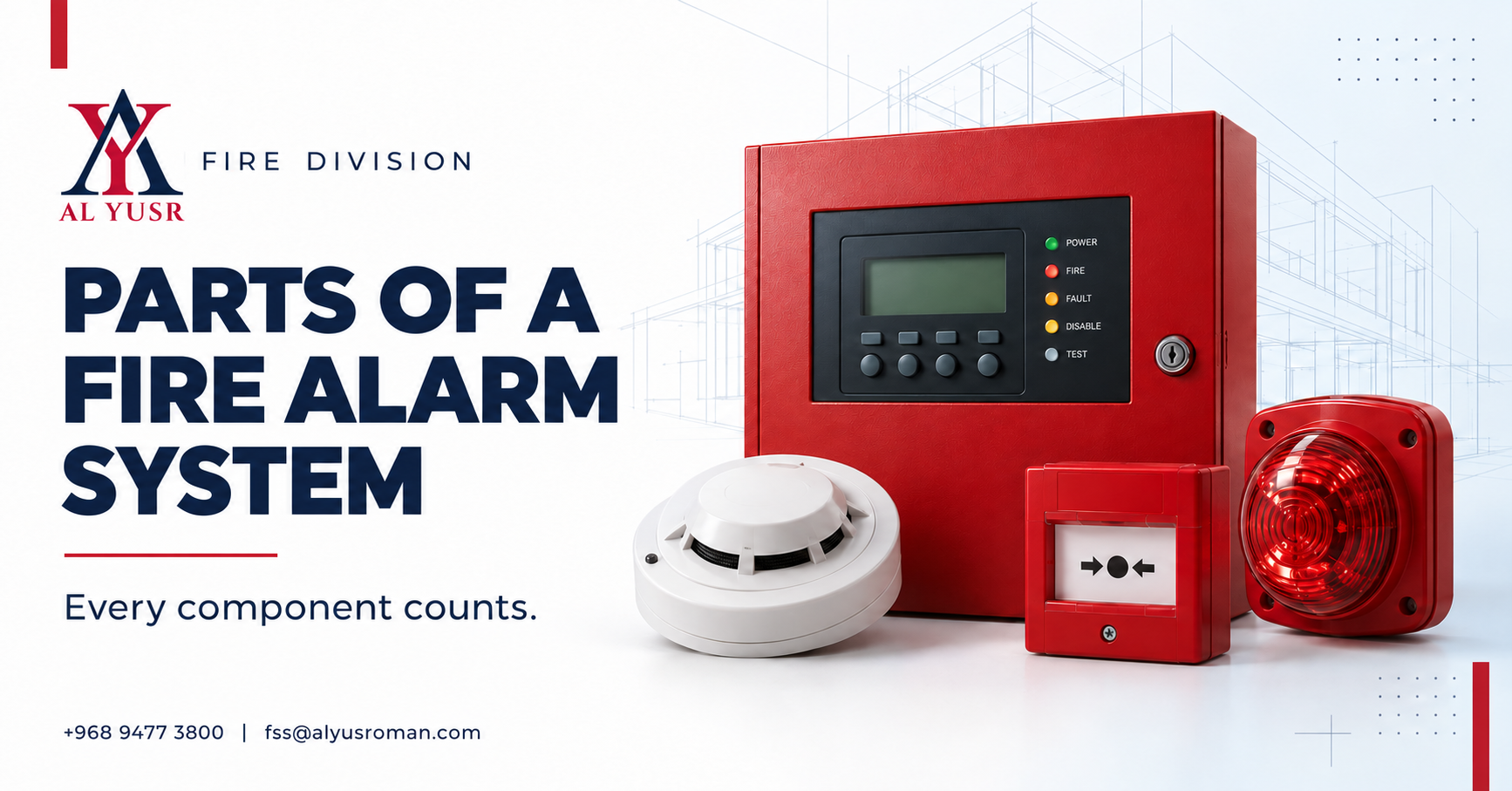
From the outside, a fire alarm system looks simple: a detector on the ceiling and a signal on the wall. Behind that sits a chain of components that decides whether people get out in time. Here are the six parts every complete fire alarm system should have, and what each one does.
The main panel is the brain of the system. It receives signals from every detector, raises the alarm and shows exactly where a fault or a fire has been detected. If the panel is down, nothing else in the fire alarm system can do its job.
The indication panel shows which zone is affected, so responders go to the right place first. In large buildings such as warehouses, compounds and shopping centres, this saves minutes that matter.
Smoke detectors sense smoke early, before flames spread. Placement and spacing matter, and dust or age can cause false alarms or, worse, missed ones. They are the most visible part of any fire alarm system and the easiest to neglect.
CO2 detectors pick up dangerous gas levels that smoke detectors can miss. They add an extra layer of protection in enclosed spaces and technical rooms where gas can build up unnoticed.
When the power fails, emergency lights keep exits and escape routes visible. Their batteries age quietly, and a dead light is only found when someone tests it, usually at the worst possible moment.
Signage tells everyone where to gather once they are out of the building. It makes a head count possible and stops people from going back in to look for colleagues.
A silent panel fault or a failed detector is only discovered when someone checks. That is why companies in Oman need a certified fire company to inspect their fire systems every year and issue an up-to-date certificate. International standards such as NFPA 72 also expect regular testing, because a fire alarm system that was perfect on installation day can drift out of working order within a year.
A proper annual inspection checks the panel, every detector, the indication panels, the emergency lights and the signage, and ends with a certificate you can show to inspectors and insurers. If your panel is already giving warnings, read our guide on the 5 signs your fire alarm panel needs service. For a wider view of testing, maintenance and licensing, see our overview of fire safety services in Oman.
If you cannot answer yes to all five, your building has a gap that is easier and cheaper to close today than after an incident.
Al Yusr Fire Division supplies, installs, inspects and maintains complete fire alarm system solutions, including fire alarm panels, indication panels, smoke and CO2 detectors, emergency lights, assembly-point signage, fire extinguishers and fire hoses. Call us on +968 9477 3800 or email [email protected] to book an inspection or request a quote.